What Is a Digital Marketing Blog? Examples, Topics, and How to Start One That Ranks

Why Most Digital Marketing Blogs Fail Before They Get a Single Reader
If you've searched for digital marketing blogs for beginners, you've probably landed on a dozen articles that all say the same thing: "Pick a niche, write consistently, and promote your content." That advice isn't wrong — it's just incomplete. The blogs that actually rank and generate leads treat every post as a business asset, not a diary entry. This guide takes a different approach. We'll show you what a digital marketing blog actually is, which topics drive real traffic, and the exact steps to build one that earns clients — not just pageviews.

What a Digital Marketing Blog Actually Is (And What It Isn't)
A digital marketing blog is a content channel that educates an audience on topics like SEO, paid ads, social media, email marketing, and content strategy — with the goal of building authority, trust, and eventually revenue. That last part is critical. A blog without a conversion goal is a hobby. A blog with one is a growth engine.
The mistake most beginners make is treating a blog like a news feed. They chase trending topics, publish inconsistently, and wonder why traffic never compounds. The blogs that win — think Backlinko, Neil Patel's blog, or Moz Blog — publish fewer posts but go deeper on each one. They answer the question behind the question.
So before you write a single word, get clear on this: who are you writing for, and what do you want them to do after they read? For a digital marketing agency, the answer is usually "attract small business owners and get them to book a discovery call." Every post you write should serve that outcome.
The Three Types of Digital Marketing Blogs Worth Studying
Not all marketing blogs are built the same. Understanding the model behind the ones that rank helps you copy what works instead of guessing.
- Authority Hubs: These are large-scale blogs run by agencies or SaaS companies. They publish 2,000–5,000-word guides targeting high-volume keywords. Think HubSpot or Semrush. Their goal is organic traffic at scale to support a software subscription or retainer business.
- Niche Expert Blogs: Run by a solo consultant or small agency, these go deep on one slice of digital marketing — say, local SEO for dentists or email marketing for e-commerce brands. They trade volume for specificity, and that specificity converts better.
- Agency Growth Blogs: These blogs talk to other marketers and agency owners. They cover pricing, client acquisition, team building, and tools. If you run an agency and want to attract talent or referral partners, this model works well. Our own Agency Growth content follows this model.
Digital Marketing Blog Topics That Actually Drive Traffic
The topic you choose matters more than how well you write. A brilliant post on a keyword nobody searches is invisible. A decent post on a keyword with 5,000 monthly searches and low competition can rank in 90 days. Here's how to pick topics that work.
Topic Clusters That Consistently Rank for Marketing Blogs
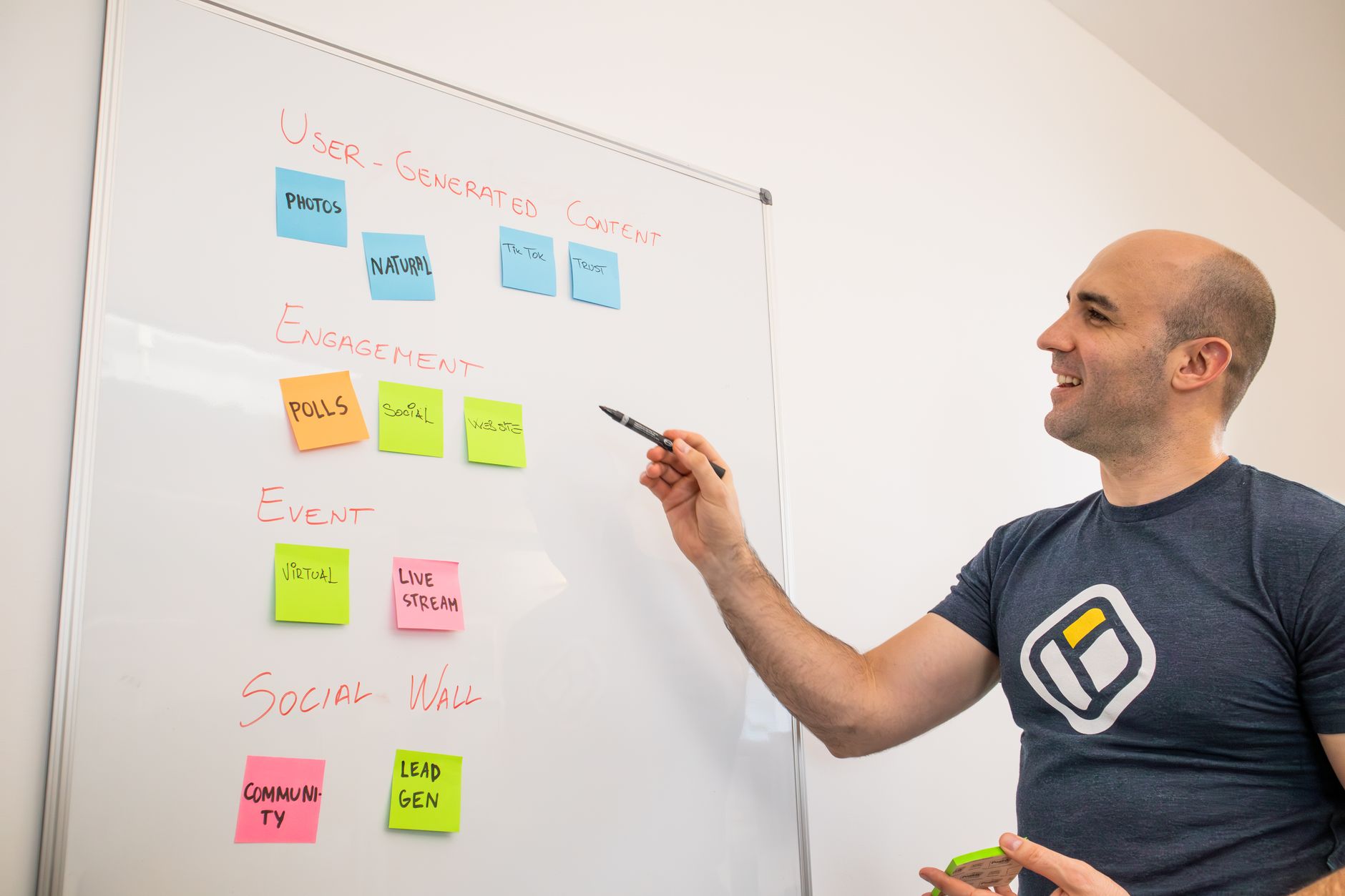
The most effective digital marketing blogs don't publish random posts — they build topic clusters. One pillar page covers a broad subject (e.g., "What Is SEO?"), and several cluster posts go deep on subtopics (e.g., "How to Do a Technical SEO Audit," "What Is Keyword Cannibalization," "How Long Does SEO Take?"). Google rewards this structure because it signals topical authority.
Here are the clusters that consistently generate traffic for marketing blogs at every stage:
- SEO fundamentals: Keyword research, on-page optimization, backlink building, site speed, and SEO audits. These have massive search volume and evergreen intent.
- Social media strategy: Platform-specific guides (Instagram Reels strategy, LinkedIn for B2B, TikTok for small business), content calendars, and analytics breakdowns.
- Content marketing: How to write blog posts that rank, content repurposing, building an editorial calendar, and measuring content ROI.
- Email and SMS marketing: List building, segmentation, automation sequences, and deliverability — perennially searched by small business owners.
- Tools and comparisons: "Best free SEO tools," "Mailchimp vs. Klaviyo," "How to use Google Search Console." These posts capture high-intent readers ready to act.
- Agency and freelance topics: How to price digital marketing services, how to get your first client, what to include in a marketing proposal.
One often-overlooked cluster: how-to posts tied to free tools. If you offer a free tool — like an SEO checker or a social image resizer — writing "how to use" guides around it drives targeted traffic that already trusts you. That's not a coincidence; it's a deliberate content-to-conversion funnel.
How to Find Topics With Real Search Demand
You don't need a $400/month SEO platform to validate topics. Start with Google's autocomplete and "People Also Ask" boxes — they surface exactly what your audience is typing. Then use a free tool like Ahrefs' free keyword generator to check monthly search volume and keyword difficulty.
A realistic target for a new blog: keywords with 500–3,000 monthly searches and a keyword difficulty score under 30. You won't beat Semrush for "what is SEO" in year one. But you can absolutely rank for "how to do an SEO audit for a small business website" — and that searcher is far more likely to become a client anyway.
Also run a quick SERP analysis before committing to a topic. If the first page is all Reddit threads and Quora answers, that's a signal Google isn't satisfied with existing content — a huge opportunity. If it's all domain-authority-90 sites, move on until you've built more authority.
How to Start a Digital Marketing Blog That Ranks: A Step-by-Step Framework
Most "how to start a blog" guides stop at "buy a domain and install WordPress." That's step one of twenty. Here's a tighter, more honest framework for building a blog that generates real results within six to twelve months.
Step 1 — Define Your Positioning Before You Write Anything
Your blog needs a point of view, not just a topic. "Digital marketing tips" is not a position. "Digital marketing strategy for service-based small businesses under 10 employees" is. The narrower your positioning, the faster you build authority — because you're not competing with everyone, you're becoming the go-to resource for someone specific.
Write a one-sentence positioning statement: "[Blog name] helps [specific audience] achieve [specific outcome] by covering [specific topics]." Pin it somewhere visible and filter every content idea through it. If a topic doesn't serve that audience, skip it — even if it has high search volume.
Step 2 — Build a Keyword-First Editorial Calendar
Don't brainstorm topics and then check if people search for them. Reverse the process. Start with keyword research, group related terms into clusters, and map them to a 90-day publishing schedule. Aim for one pillar post and two to three cluster posts per month when starting out — consistency beats volume every time.
For each post, document: the target keyword, the search intent (informational, navigational, transactional), the word count of the top three ranking competitors, and the unique angle you'll take. That angle is non-negotiable. If your post says exactly what the first result already says, Google has no reason to swap it in.
Step 3 — Optimize Every Post for Search and Conversion
On-page SEO is table stakes. Your target keyword goes in the title tag, H1, first paragraph, at least one H2, the meta description, and naturally throughout the body. But the detail most beginners miss is search intent alignment. A post targeting "SEO audit checklist" should deliver a checklist — not a 3,000-word essay that buries the list at the bottom.
Beyond SEO, every post needs a conversion path. That might be a CTA to download a free resource, a link to a relevant tool, or an invitation to book a call. Don't make readers hunt for next steps. For example, if you're writing about social media strategy, linking to a free social media management tool gives readers an immediate, low-friction way to engage with your brand.
Step 4 — Build Internal Links Deliberately
Internal linking is one of the most underused SEO levers available to new blogs. Every time you publish a new post, go back to two or three older posts and add a contextual link to the new one. This distributes link equity and helps Google understand your site's structure. It also keeps readers on your site longer — which signals quality.
Group your posts by topic cluster and make sure every cluster post links back to its pillar page. If you're building a cluster around content strategy, for instance, every related post should link back to your main content strategy guide. Explore more ideas in our Content Strategy articles to see this in practice.
Step 5 — Promote Before You Publish (Yes, Really)
Most bloggers publish and then promote. Flip it. Before a post goes live, identify five to ten people who would genuinely find it useful — journalists, other bloggers, community members, potential clients. Reach out, mention you're covering the topic, and ask if they'd like a preview or if they have a quote to contribute. This pre-launch outreach builds relationships and often earns a share or backlink on day one.
After publishing, repurpose the post into at least three formats: a LinkedIn carousel, a short-form video script, and an email newsletter snippet. One piece of content, four distribution channels. That's how small teams punch above their weight.

Common Mistakes That Kill New Marketing Blogs
Experience teaches these the hard way. Save yourself six months of wasted effort by avoiding the following from day one.
- Publishing without a keyword strategy: Writing what you feel like writing instead of what people search for is the single fastest way to build a blog nobody reads. Every post needs a validated keyword target.
- Ignoring technical SEO: Slow page speed, missing meta descriptions, broken internal links, and non-mobile-friendly layouts tank rankings before your content gets a fair shot. Run a free SEO audit before you launch — tools like those available at Terra Market Group's free tools suite can surface these issues quickly.
- Trying to cover everything: A blog that covers SEO, social media, email, PPC, web design, branding, and influencer marketing signals to Google that it's a generalist — and generalists rank for nothing. Pick two or three clusters and dominate them before expanding.
- Quitting after 90 days: Most blogs see their first meaningful organic traffic between months four and nine. The blogs that survive that dry spell are the ones that eventually rank. The ones that don't are the ones that leave room for you to take their spot.
- No clear CTA: Every post should guide readers toward a specific next step. Whether it's subscribing to your newsletter, downloading a resource, or booking a call — make it obvious and make it relevant to what they just read.
Real Examples of Digital Marketing Blog Topics That Convert
Abstract advice only goes so far. Here are concrete post ideas — with the angle that makes each one rankable and useful, not generic.
- "How to Do an SEO Audit in 30 Minutes (Free Checklist)" — Targets small business owners who can't afford an agency yet. Pair it with a free downloadable checklist and a soft CTA to your audit service.
- "Why Your Instagram Reach Dropped — And the Fix That Actually Works" — Specific, problem-aware title. Covers algorithm changes with concrete data, not vague speculation.
- "Email Marketing for Service Businesses: The 5-Email Welcome Sequence That Books Calls" — Niche-specific and outcome-focused. Readers know exactly what they'll get and why it matters to them.
- "What to Post on LinkedIn Every Week (With Real Examples)" — Evergreen, high-intent, and easy to update quarterly as the platform evolves.
- "How We Grew a Client's YouTube Channel by 300% in 6 Months" — Case study format. Specific numbers, named tactics, real results. This type of post builds trust faster than any how-to guide.
Notice the pattern: every title is specific, names an outcome, and implies the reader will walk away with something actionable. That's not an accident. Vague titles get skipped in search results. Specific ones get clicked.
Starting Your Blog: The First 30 Days Action Plan
Here's what the first month should look like if you're serious about building a blog that ranks.
- Week 1: Define your audience, write your positioning statement, and do keyword research for your first topic cluster. Aim for 20–30 validated keyword ideas.
- Week 2: Set up your blog technically — fast hosting, clean URL structure, XML sitemap, Google Search Console, and Google Analytics 4. Fix any existing site issues before you publish.
- Week 3: Write and publish your first pillar post (aim for 2,000–3,000 words). Optimize it fully: keyword in title, H1, first paragraph, meta description, and at least one H2. Add internal links and a clear CTA.
- Week 4: Publish your first cluster post and link it to your pillar. Begin promoting both pieces — share on social, send to your email list, reach out to two or three people who might share it.
That's a realistic, achievable first month. Not ten posts, not a viral campaign — just a solid foundation built the right way. For a deeper dive into turning your blog into a genuine revenue channel, read our guide on how to start a digital marketing blog and turn it into a $1,000/month client engine.
Building Authority Takes Time — Here's How to Compress It
Organic SEO is a long game, but you can accelerate it. Guest posting on established marketing blogs earns backlinks and exposes you to an existing audience. One well-placed guest post on a domain with authority 50+ can move your rankings more than ten self-published posts. Aim for two to three guest posts in your first six months.
Digital PR is another lever most beginners ignore. Publish original data — a survey of 100 small business owners about their marketing budgets, for example — and pitch it to marketing journalists. Original data earns links passively for years. It also positions you as a source, not just a commentator.
Finally, don't underestimate the compound effect of email. Every blog post you publish should go to your email list. A list of 500 engaged subscribers who open, click, and share your content is more valuable than 5,000 passive social followers. Build it from day one. Start before you think you're ready.
Ready to put this into action? Get in touch with the Terra Market Group team to discuss how a structured content strategy can grow your brand — or explore our Beginner Guides to keep building your knowledge step by step.